Cast iron cookware is considered a healthy and safe choice for most people when it is used and maintained correctly. It is naturally free from synthetic non-stick coatings, highly durable, and can add small amounts of iron to food during cooking.
However, cast iron cookware is not perfect for every situation. It can transfer more iron into acidic foods, and people with iron overload conditions may need to be careful with frequent use. It also requires proper cleaning, drying, and seasoning to prevent rust and maintain a safe cooking surface.
In this guide, you’ll learn whether cast iron cookware is really healthy, its main benefits, possible risks, how it compares with non-stick and stainless steel cookware, and the best way to use and clean it safely for everyday cooking.
Quick Answer: Is Cast Iron Cookware Healthy?
Yes, cast iron cookware is healthy for most people when it is used, cleaned, and seasoned correctly. It is made from natural iron, does not need synthetic non-stick coatings, and can last for many years with proper care.
One of the main reasons people choose healthy cast iron cookware is that it offers a strong, natural cooking surface without relying on chemical coatings. It also holds heat very well, which makes it suitable for searing, grilling, frying, baking, and everyday cooking.
However, cast iron cookware should be maintained properly. If it is left wet, it can rust. If it is used often with acidic foods, it may transfer more iron into food and weaken the seasoning layer. For most people, this is not a serious issue, but people with iron overload conditions should be more careful.
What Is Cast Iron Cookware Made Of?
Cast iron cookware is made mainly from iron with a small amount of carbon. This combination creates a strong, heavy, and durable material that can handle high heat and retain warmth for a long time.
Unlike many modern non-stick pans, traditional cast iron does not depend on a synthetic coating. Instead, it develops a natural protective layer called seasoning. This seasoning is created when a thin layer of oil is heated onto the surface of the pan, skillet, grill, or Dutch oven.
A well-seasoned piece of cast iron cookware becomes easier to cook with, easier to clean, and more resistant to rust. This is why proper seasoning is one of the most important steps for keeping cast iron safe, healthy, and long-lasting.
Why Cast Iron Cookware Is Becoming Popular Again
In recent years, many home cooks and professional chefs have started returning to cast iron cookware because it offers something many modern pans do not: durability, natural materials, and excellent cooking performance.
While non-stick pans are popular because they are easy to use, many people now prefer cookware that can last longer and does not depend on synthetic coatings. This is one of the main reasons healthy cast iron cookware has become popular again in modern kitchens.
Another reason is versatility. A single cast iron skillet, grill pan, or Dutch oven can be used for frying, searing, baking, roasting, grilling, and slow cooking. With proper care, it can serve the kitchen for many years.
Main Health Benefits of Cast Iron Cookware
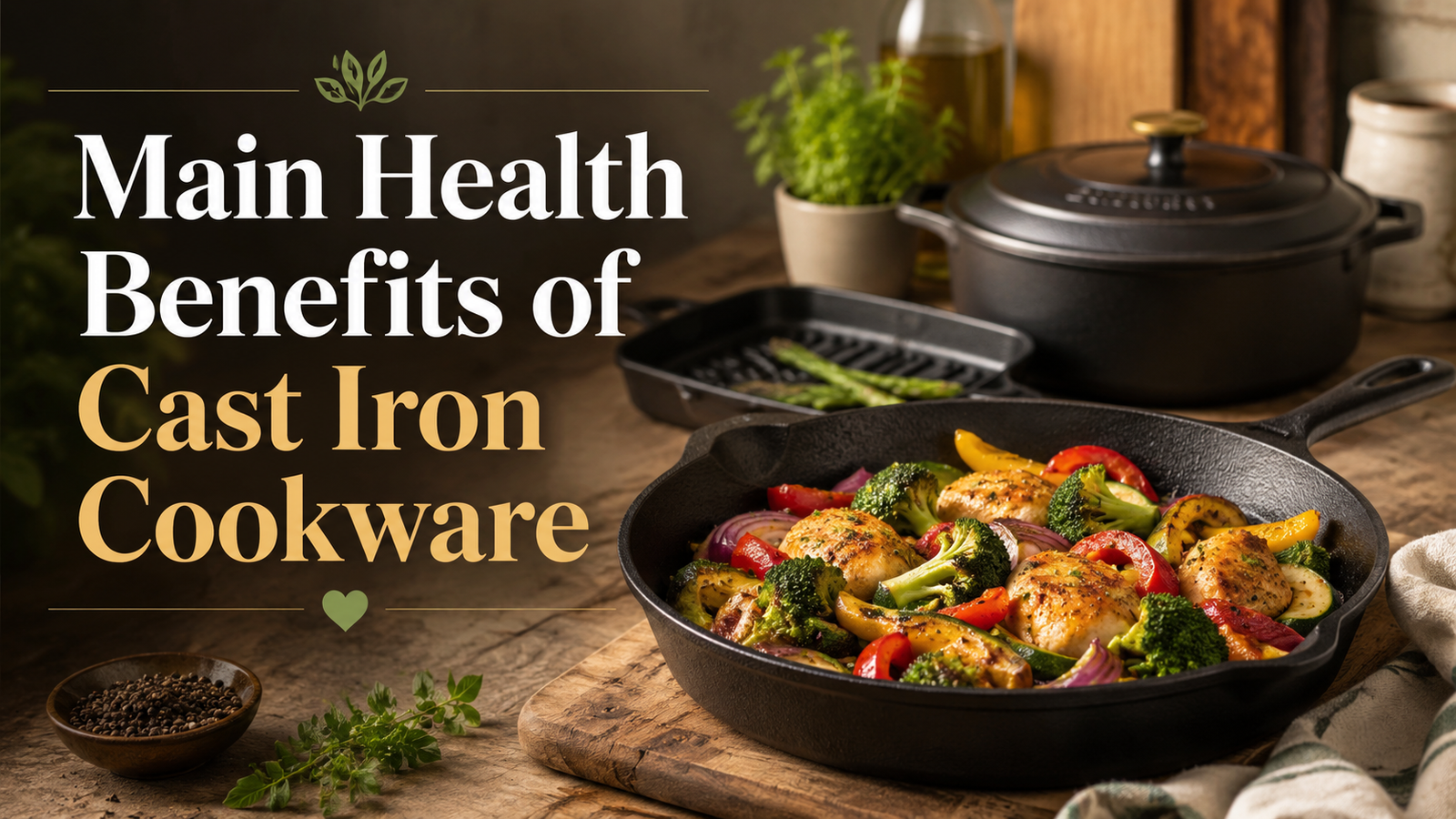
Cast iron cookware offers several health and cooking benefits when it is used correctly. It is not only strong and long-lasting, but also a natural option for people who want to avoid synthetic non-stick coatings.
1. Free from Synthetic Non-Stick Coatings
One of the biggest benefits of cast iron cookware is that it does not rely on synthetic non-stick coatings. Traditional cast iron develops its cooking surface through seasoning, which is created by heating a thin layer of oil onto the cookware.
This makes cast iron cookware a strong choice for people looking for a more natural cooking surface. When the pan is seasoned and maintained properly, it becomes easier to cook with and less likely to stick.
2. Can Add Small Amounts of Iron to Food
Another important benefit of cast iron cookware is that it can add small amounts of iron to food during cooking. This usually happens more with acidic or moist foods, such as tomato-based dishes.
For most people, this small iron transfer is not a problem. In some cases, it may even be helpful for people who need more dietary iron. However, anyone with iron overload or a medical condition related to iron levels should be careful and follow medical advice.
3. Excellent Heat Retention for Better Cooking
Cast iron cookware is known for excellent heat retention. Once it becomes hot, it stays hot for a long time and distributes heat steadily across the cooking surface.
This makes it ideal for searing meat, grilling vegetables, frying eggs, baking bread, and preparing meals that need stable heat. Good heat retention also helps improve flavor, texture, and browning.
4. Durable Cookware That Can Last for Decades
A major advantage of cast iron cookware is durability. A good cast iron skillet, grill pan, or Dutch oven can last for decades if it is cleaned, dried, and seasoned correctly.
Unlike some coated pans that may wear out over time, cast iron cookware can often be restored even if it becomes rusty or dull. This makes it a long-term investment for families and professional kitchens.
5. Suitable for High-Heat Cooking
Cast iron cookware performs very well at high temperatures. It is commonly used for searing steaks, grilling chicken, frying vegetables, and baking dishes that need strong, consistent heat.
Because of this, cast iron cookware is a practical choice for people who want cookware that can move from stovetop to oven and handle different cooking methods safely.
Does Cast Iron Cookware Add Iron to Food?
Yes, cast iron cookware can add small amounts of iron to food during cooking. This is one of the most discussed points when people ask whether cast iron cookware is healthy.
The amount of iron transferred from the cookware to the food is not always the same. It depends on several factors, including the type of food, cooking time, acidity, moisture, and how well the cookware is seasoned.
How Much Iron Can Transfer into Food?
The amount of iron that transfers from cast iron cookware into food can vary. Acidic foods, wet dishes, and longer cooking times usually increase iron transfer. For example, tomato sauce, citrus-based recipes, and slow-cooked dishes may absorb more iron than dry foods like bread or grilled meat.
A newer or poorly seasoned pan may also transfer more iron than a well-seasoned pan. As the seasoning layer becomes stronger, it creates a more protective cooking surface and may reduce direct contact between food and raw iron.
Which Foods Absorb More Iron from Cast Iron?
Some foods are more likely to absorb iron from cast iron cookware than others. These include:
- Tomato-based sauces
- Citrus-based marinades
- Vinegar-based dishes
- Soups and stews
- Moist foods cooked for a long time
- Foods cooked in a newer or lightly seasoned pan
On the other hand, foods like grilled chicken, steak, pancakes, bread, and roasted vegetables usually absorb less iron because they are less acidic and contain less liquid.
Is Iron Transfer Good or Bad?
For most people, small amounts of iron transfer from cast iron cookware are not harmful. In some cases, it may support dietary iron intake, especially for people who do not get enough iron from food.
However, iron transfer is not always beneficial for everyone. People with iron overload conditions, such as hemochromatosis, should be careful with frequent use of traditional cast iron cookware, especially when cooking acidic foods.
So, is iron transfer from cast iron cookware good or bad? For most healthy adults, it is generally not a problem. For people who need to limit iron intake, it is better to speak with a healthcare professional and consider alternatives like enameled cast iron or stainless steel.
Is Cast Iron Cookware Safe for Everyday Cooking?
Yes, cast iron cookware is safe for everyday cooking for most people when it is properly seasoned, cleaned, and dried after each use. It is commonly used for frying, searing, baking, grilling, and slow cooking because it can handle high heat and retain warmth very well.
The key to safe daily use is maintenance. A well-seasoned piece of cast iron cookware creates a protective cooking surface that helps reduce sticking, protects the pan from rust, and makes cleaning easier.
However, daily use may not be ideal for everyone. People who need to limit iron intake should be careful, especially if they often cook acidic foods in traditional uncoated cast iron. For most home cooks, though, cast iron cookware is a safe, natural, and long-lasting option.
Potential Risks of Cast Iron Cookware
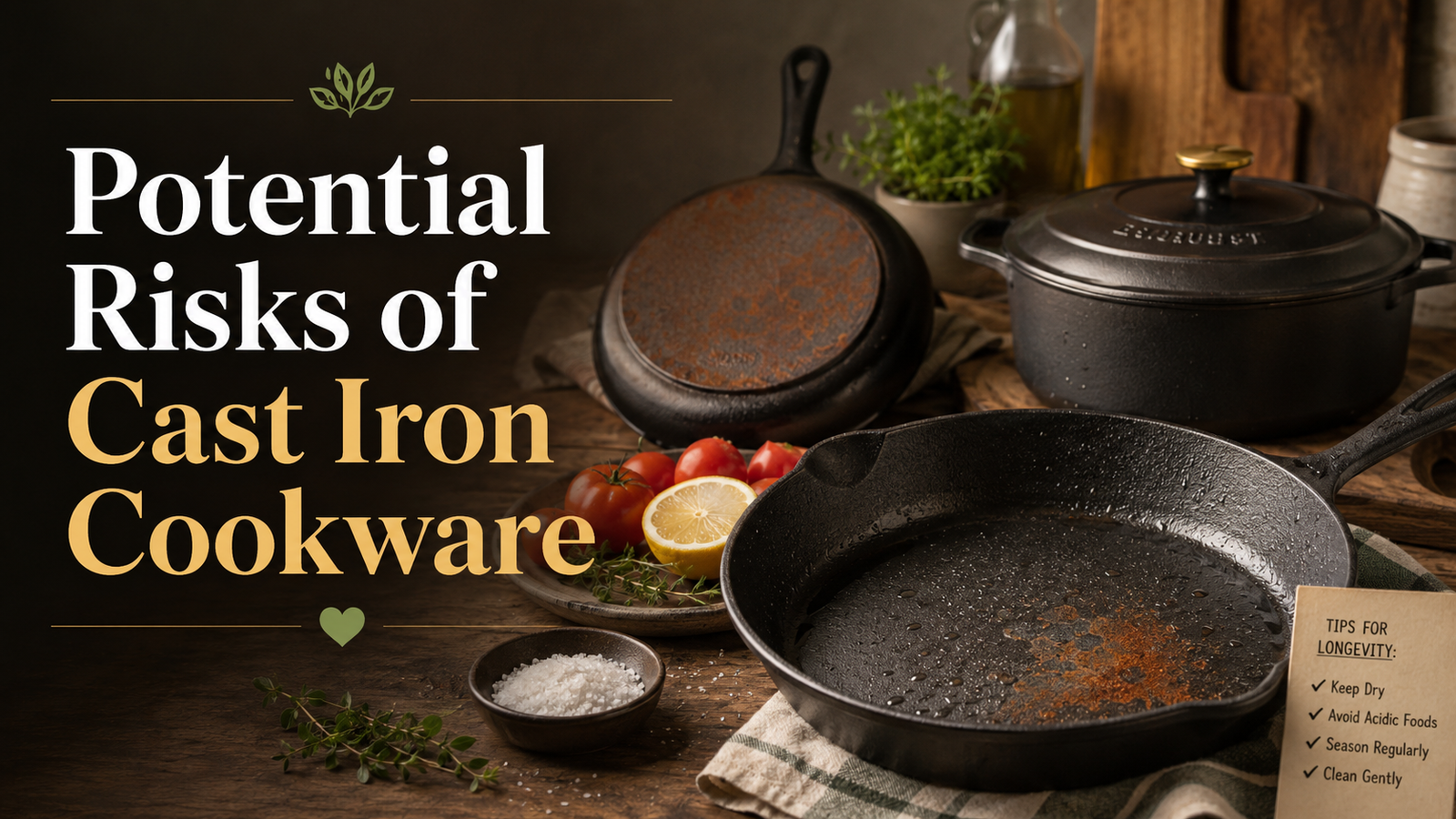
Although cast iron cookware has many benefits, it also has some possible risks if it is used or maintained incorrectly. Understanding these risks helps you use cast iron safely and get the best results from it.
1. Too Much Iron for People with Iron Overload
Because cast iron cookware can transfer small amounts of iron into food, people with iron overload conditions should be careful. This is especially important when cooking acidic dishes such as tomato sauce, vinegar-based recipes, or citrus marinades.
For most people, this iron transfer is not a major concern. But for anyone diagnosed with hemochromatosis or advised to reduce iron intake, frequent cooking with traditional cast iron cookware may not be the best choice.
2. Rust if the Cookware Is Not Dried Properly
Rust is one of the most common problems with cast iron cookware. It usually happens when the pan is left wet, soaked for too long, washed in a dishwasher, or stored in a humid place.
A small amount of surface rust can often be removed, and the cookware can be restored with cleaning and re-seasoning. However, it is always better to prevent rust by drying the cookware completely after washing and applying a very light layer of oil before storage.
3. Acidic Foods Can Affect the Seasoning
Acidic foods can weaken the seasoning layer on cast iron cookware, especially if they are cooked for a long time. Foods like tomatoes, vinegar, lemon, and wine-based sauces may react more with the iron surface.
This does not mean you can never cook acidic foods in cast iron. Short cooking times are usually fine in a well-seasoned pan. But for long simmering recipes, enameled cast iron or stainless steel may be a better option.
4. Poor Cleaning Can Damage the Cooking Surface
Using harsh detergents, metal scrapers, long soaking, or a dishwasher can damage the seasoning on cast iron cookware. When the seasoning becomes weak, food may stick more easily and the pan may become more likely to rust.
To keep cast iron cookware healthy and safe, clean it gently with warm water, a soft brush or sponge, then dry it completely and apply a thin layer of oil.
5. Heavy Weight and Handling Risks
Cast iron cookware is heavier than many other types of cookware. This can make it harder to lift, move, or wash, especially when the pan is hot or full of food.
For some users, especially elderly people or anyone with wrist or hand problems, the weight may be uncomfortable. Choosing the right size and using both hands when carrying heavy cast iron can help reduce this risk.
Who Should Be Careful When Using Cast Iron Cookware?
Cast iron cookware is safe and healthy for most people, but some users should be more careful depending on their health condition, cooking habits, or daily needs. This does not mean cast iron is unsafe; it simply means that the right cookware choice can vary from person to person.
People with Hemochromatosis or Iron Overload
People with hemochromatosis or iron overload conditions should be careful with frequent use of traditional cast iron cookware. Since cast iron can transfer small amounts of iron into food, regular cooking in uncoated cast iron may not be suitable for people who need to limit iron intake.
In this case, enameled cast iron, stainless steel, or other cookware options may be better choices. Anyone with a diagnosed iron-related condition should follow medical advice before using cast iron cookware every day.
People Who Cook Acidic Foods Every Day
If you cook tomato sauce, vinegar-based dishes, lemon recipes, or other acidic foods every day, traditional cast iron cookware may require extra care. Acidic foods can weaken the seasoning layer over time, especially when cooked for long periods.
A well-seasoned cast iron pan can handle short cooking with acidic ingredients, but long simmering is better done in enameled cast iron or stainless steel. This helps protect the seasoning and keeps the cookware easier to maintain.
People Who Need Lightweight Cookware
Cast iron cookware is heavier than many other types of cookware. This weight is part of what makes it durable and excellent at holding heat, but it can also be a drawback for some users.
People with wrist pain, hand weakness, shoulder problems, or anyone who prefers lightweight cookware may find large cast iron skillets, grills, or Dutch ovens harder to handle. In this case, choosing a smaller size or using two hands when lifting can make cooking safer and easier.
Beginners Who Do Not Want Regular Maintenance
Traditional cast iron cookware needs basic care to stay in good condition. It should be cleaned properly, dried completely, and lightly oiled after use. If someone wants cookware that can be soaked for hours, washed in a dishwasher, or stored without care, cast iron may not be the easiest option.
However, once you learn the simple care routine, cast iron cookware becomes much easier to use and can last for many years.
Cast Iron Cookware vs Non-Stick Pans: Which Is Healthier?
When comparing cast iron cookware with non-stick pans, the healthier choice depends on what you care about most: convenience, durability, heat performance, or avoiding synthetic coatings.
Non-stick pans are easy to use and easy to clean, especially for eggs, pancakes, and low-fat cooking. However, their coating can wear down over time, especially if the pan is scratched, overheated, or cleaned with harsh tools.
Cast iron cookware, on the other hand, is heavier and requires seasoning, but it does not depend on a synthetic non-stick coating. With proper care, it can last for decades and perform well at high temperatures.
For people who want long-term durability and a natural cooking surface, cast iron cookware is often the better choice. For people who want the easiest daily cleaning, non-stick pans may feel more convenient.
Cast Iron Cookware vs Stainless Steel
Both cast iron cookware and stainless steel cookware are strong, durable, and popular in professional kitchens. However, they perform differently.
Cast iron cookware is better for heat retention. It stays hot for a long time, making it ideal for searing, grilling, frying, baking, and slow cooking. It also develops a seasoned surface over time, which can help reduce sticking.
Stainless steel cookware heats up faster and is usually lighter than cast iron. It is also easier to use with acidic foods like tomatoes, lemon, and vinegar because it does not require seasoning.
If you want powerful heat retention and long-lasting performance, cast iron cookware is a great choice. If you cook acidic sauces often or prefer lighter cookware, stainless steel may be more practical.
Cast Iron Cookware vs Aluminum Cookware
Aluminum cookware is lightweight, affordable, and heats up quickly. This makes it convenient for everyday cooking. However, it may not retain heat as well as cast iron cookware, and some aluminum cookware depends on coatings to improve performance.
Cast iron cookware is heavier, slower to heat, and needs more care, but it offers excellent heat retention and long-term durability. It is especially useful for high-heat cooking, grilling, searing, and oven recipes.
For quick, lightweight cooking, aluminum may be easier. For strength, heat retention, and long-term use, cast iron cookware is the stronger option.
Enameled Cast Iron vs Traditional Cast Iron: Which Is Better for Health?
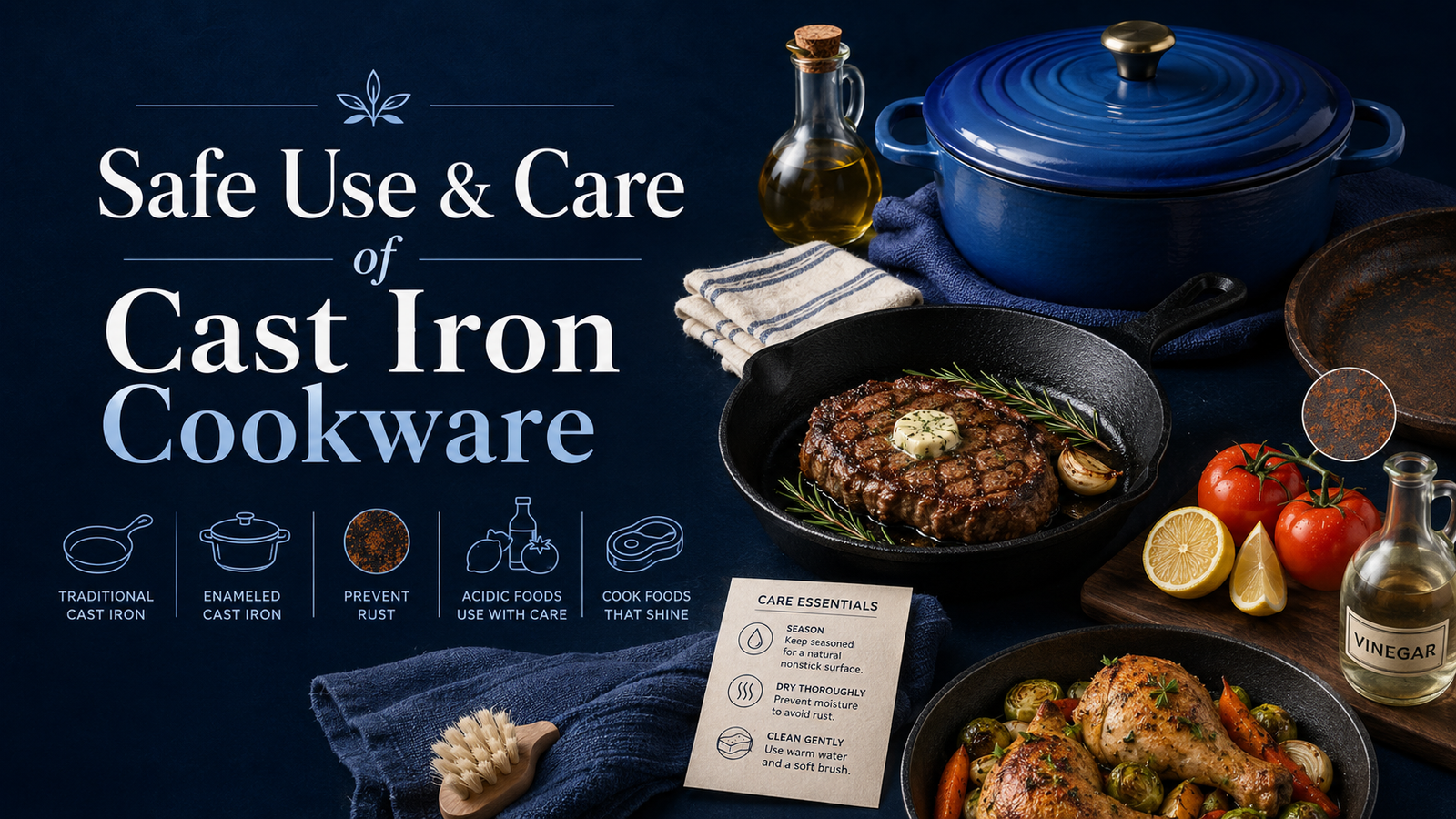
Both enameled cast iron and traditional cast iron cookware can be healthy choices, but they are different in use and maintenance.
Traditional cast iron cookware has no enamel coating and needs seasoning to protect the surface. It can transfer small amounts of iron into food, especially with acidic ingredients. It is excellent for searing, frying, grilling, and baking.
Enameled cast iron has a protective enamel layer, so it does not need seasoning and is better for acidic foods like tomato sauce, lemon recipes, and slow-cooked stews. It also reduces direct iron transfer into food.
If you want a natural, seasoned cooking surface and high-heat performance, traditional cast iron cookware is a great choice. If you cook acidic foods often and want easier maintenance, enameled cast iron may be better.
Is Rust on Cast Iron Cookware Dangerous?
Rust on cast iron cookware is a common problem, especially if the pan is left wet, soaked for too long, or stored in a humid place. A small amount of surface rust does not always mean the cookware is ruined, but it should be cleaned and removed before cooking.
Rust can affect the taste, appearance, and safety of the cooking surface if it is ignored for a long time. The good news is that most rusty cast iron cookware can be restored by scrubbing off the rust, drying the cookware completely, and re-seasoning it with a thin layer of oil.
To prevent rust, always dry your cast iron cookware immediately after washing and apply a very light coat of oil before storing it.
Can You Cook Acidic Foods in Cast Iron?
Yes, you can cook acidic foods in cast iron cookware, but with some care. Acidic ingredients such as tomatoes, lemon juice, vinegar, and wine can react with the iron surface, especially if the cookware is new, poorly seasoned, or used for long simmering.
Short cooking with acidic foods is usually fine in a well-seasoned cast iron pan. For example, adding a little lemon juice at the end of cooking or making a quick tomato-based dish should not cause a major issue.
However, if you plan to cook tomato sauce, vinegar-based stews, or citrus-heavy recipes for a long time, enameled cast iron or stainless steel may be a better choice. This helps protect the seasoning layer and reduces metallic taste.
Best Foods to Cook in Cast Iron Cookware
Cast iron cookware is excellent for foods that need high heat, steady temperature, and strong browning. Because it holds heat very well, it is one of the best choices for searing, grilling, frying, roasting, and baking.
Some of the best foods to cook in cast iron cookware include:
- Steak and grilled meat
- Chicken breasts and chicken thighs
- Burgers
- Grilled vegetables
- Fried eggs
- Potatoes
- Cornbread
- Pizza
- Bread
- Pancakes
- Fish with crispy skin
- Oven-baked dishes
These foods work well because cast iron cookware keeps heat steady and helps create a rich, browned surface that improves flavor and texture.
Foods You Should Be Careful Cooking in Cast Iron
Although cast iron cookware is very versatile, some foods need extra care. This does not mean they are forbidden, but they may require a well-seasoned pan, shorter cooking time, or a different type of cookware.
Be careful with:
- Long-simmered tomato sauce
- Vinegar-heavy dishes
- Lemon-based sauces
- Delicate fish that sticks easily
- Very wet dishes in a new pan
- Foods with strong smells if the pan is not cleaned properly
For best results, use a well-seasoned piece of cast iron cookware and avoid leaving acidic or wet food sitting in the pan after cooking.
How to Use Cast Iron Cookware Safely
Using cast iron cookware safely is simple when you understand the right routine. The goal is to protect the seasoning layer, prevent rust, and keep the cooking surface clean and reliable.
A well-maintained piece of cast iron cookware can be used for daily cooking, high-heat searing, oven baking, grilling, frying, and slow cooking. Follow these steps to get the best results.
Step 1: Season the Cookware Properly
Seasoning is one of the most important steps for keeping cast iron cookware healthy, safe, and easy to use. Seasoning creates a thin protective layer on the surface of the pan, skillet, grill, or Dutch oven.
To season cast iron cookware, apply a very thin layer of cooking oil to the surface, then heat it until the oil bonds with the iron. This helps reduce sticking, protects against rust, and improves the cooking surface over time.
Step 2: Preheat It Slowly
Cast iron cookware holds heat very well, but it needs time to heat evenly. Instead of placing it on very high heat immediately, start with low or medium heat and allow the cookware to warm gradually.
Slow preheating helps prevent hot spots and gives you better cooking control. Once the cookware is hot, it will stay hot for a long time, making it ideal for searing, frying, and grilling.
Step 3: Use the Right Amount of Oil
Even well-seasoned cast iron cookware may need a small amount of oil, especially when cooking eggs, fish, pancakes, or other foods that may stick.
You do not need to use too much oil. A thin, even layer is usually enough. As the seasoning improves over time, the surface becomes smoother and easier to cook with.
Step 4: Avoid Long Soaking in Water
One of the biggest mistakes with cast iron cookware is leaving it soaked in water. Long soaking can weaken the seasoning layer and increase the risk of rust.
After cooking, clean the cookware as soon as possible. If food is stuck, use warm water and a soft brush or sponge instead of leaving the pan full of water for hours.
Step 5: Dry It Completely After Washing
Drying is essential for preventing rust on cast iron cookware. After washing, wipe the cookware with a clean towel, then place it on low heat for a short time to remove any remaining moisture.
Never store cast iron while it is still wet. Even a small amount of water can cause rust if the cookware is left in a humid place.
Step 6: Apply a Light Oil Layer Before Storage
After drying your cast iron cookware, apply a very light layer of oil to the cooking surface before storing it. This helps protect the iron from moisture and keeps the seasoning in good condition.
Use only a small amount of oil. The surface should look lightly coated, not greasy or sticky. Then store the cookware in a dry place.
How to Clean Cast Iron Cookware Without Damaging It
Cleaning cast iron cookware the right way helps protect the seasoning layer and keeps the cooking surface safe for daily use. The most important rule is simple: clean it gently, dry it completely, and never leave it wet.
After cooking, allow the cast iron cookware to cool slightly, then wash it with warm water and a soft sponge or brush. If food is stuck, use coarse salt or a non-metal brush to scrub the surface gently.
You can use a small amount of mild soap when needed, but avoid harsh detergents, long soaking, and dishwashers. These can weaken the seasoning and make the cookware more likely to rust.
After washing, dry the cookware immediately with a towel. For extra protection, place it on low heat for a minute to remove any remaining moisture, then apply a very thin layer of oil before storing.
How to Prevent Rust on Cast Iron Cookware
Rust prevention is one of the most important parts of caring for cast iron cookware. Rust usually appears when the cookware is exposed to water, humidity, or improper storage.
To prevent rust:
- Do not soak cast iron cookware for long periods.
- Do not wash it in a dishwasher.
- Dry it completely after every wash.
- Apply a very light coat of oil after drying.
- Store it in a dry place.
- If stacking cookware, place a paper towel or cloth between pieces.
A small daily care routine can keep cast iron cookware rust-free, safe, and ready for long-term use.
How to Restore Rusty Cast Iron Cookware
If your cast iron cookware becomes rusty, it does not always mean you need to replace it. In many cases, rusty cast iron can be cleaned, restored, and used again.
Start by scrubbing the rusty area with a brush, steel wool, or coarse salt until the rust is removed. Then wash the cookware with warm water, dry it completely, and apply a thin layer of oil.
After that, re-season the cast iron cookware by heating it until the oil bonds to the surface. This restores the protective layer and helps prevent rust from returning.
If the rust is very deep, covers most of the cookware, or creates rough damaged spots, the cookware may need stronger restoration or replacement. But for normal surface rust, cleaning and re-seasoning are usually enough.
Common Mistakes That Make Cast Iron Less Healthy
Cast iron cookware is safe and healthy for most people, but wrong use can reduce its benefits and damage the cooking surface. Many problems happen because of poor cleaning, weak seasoning, or improper storage.
Here are the most common mistakes to avoid:
- Leaving cast iron cookware wet after washing
- Soaking it in water for a long time
- Washing it in a dishwasher
- Using harsh detergents every day
- Scraping the seasoning layer with sharp metal tools
- Storing it in a humid place
- Cooking acidic foods for too long in a poorly seasoned pan
- Forgetting to apply a light oil layer after drying
Avoiding these mistakes helps keep cast iron cookware clean, rust-free, and safe for everyday cooking.
Is Cast Iron Cookware Good for Children?
Yes, cast iron cookware can be safe for cooking family meals and food for children when it is properly cleaned, dried, and seasoned. It does not rely on synthetic non-stick coatings, and it can be used for many healthy homemade meals.
However, children should not handle hot cast iron cookware because it becomes very hot and stays hot for a long time. The cookware is also heavy, so adults should always handle it carefully when cooking or serving food.
For family cooking, cast iron cookware is a strong choice for preparing eggs, pancakes, grilled chicken, vegetables, baked dishes, and many everyday meals.
Is Cast Iron Cookware Good for People with Anemia?
Cast iron cookware can add small amounts of iron to food, especially when cooking moist or acidic dishes. For some people with low iron intake, this may support dietary iron levels as part of a balanced diet.
However, cast iron cookware should not be treated as a medical treatment for anemia. Anemia can have different causes, and anyone with low iron levels should follow advice from a healthcare professional.
If a person has anemia caused by iron deficiency, cooking with cast iron cookware may be helpful as a small dietary support, but it should not replace proper medical care, supplements, or nutrition advice when needed.
Is Cast Iron Cookware Safe During Pregnancy?
For most pregnant women, cast iron cookware is generally safe when used properly. It does not contain synthetic non-stick coatings and can be used to prepare a wide range of homemade meals.
Because iron needs can change during pregnancy, some people may think cast iron cookware is always beneficial. However, iron intake during pregnancy should be managed carefully and should follow medical advice.
Pregnant women with normal health can usually use cast iron cookware safely, but anyone with special medical conditions, high iron levels, or specific dietary restrictions should speak with a healthcare professional.
Is Cast Iron Cookware Safe for Professional Kitchens?
Yes, cast iron cookware is widely used in professional kitchens because it is durable, strong, and excellent for high-heat cooking. Chefs often use cast iron skillets, grill pans, and Dutch ovens for searing, grilling, baking, roasting, and slow cooking.
In professional kitchens, the main challenge is maintenance. Cast iron cookware must be cleaned quickly, dried completely, and stored properly to prevent rust and protect the seasoning.
When cared for correctly, cast iron cookware can handle heavy use and deliver consistent cooking results for restaurants, catering businesses, and serious home cooks.
How to Choose Healthy Cast Iron Cookware
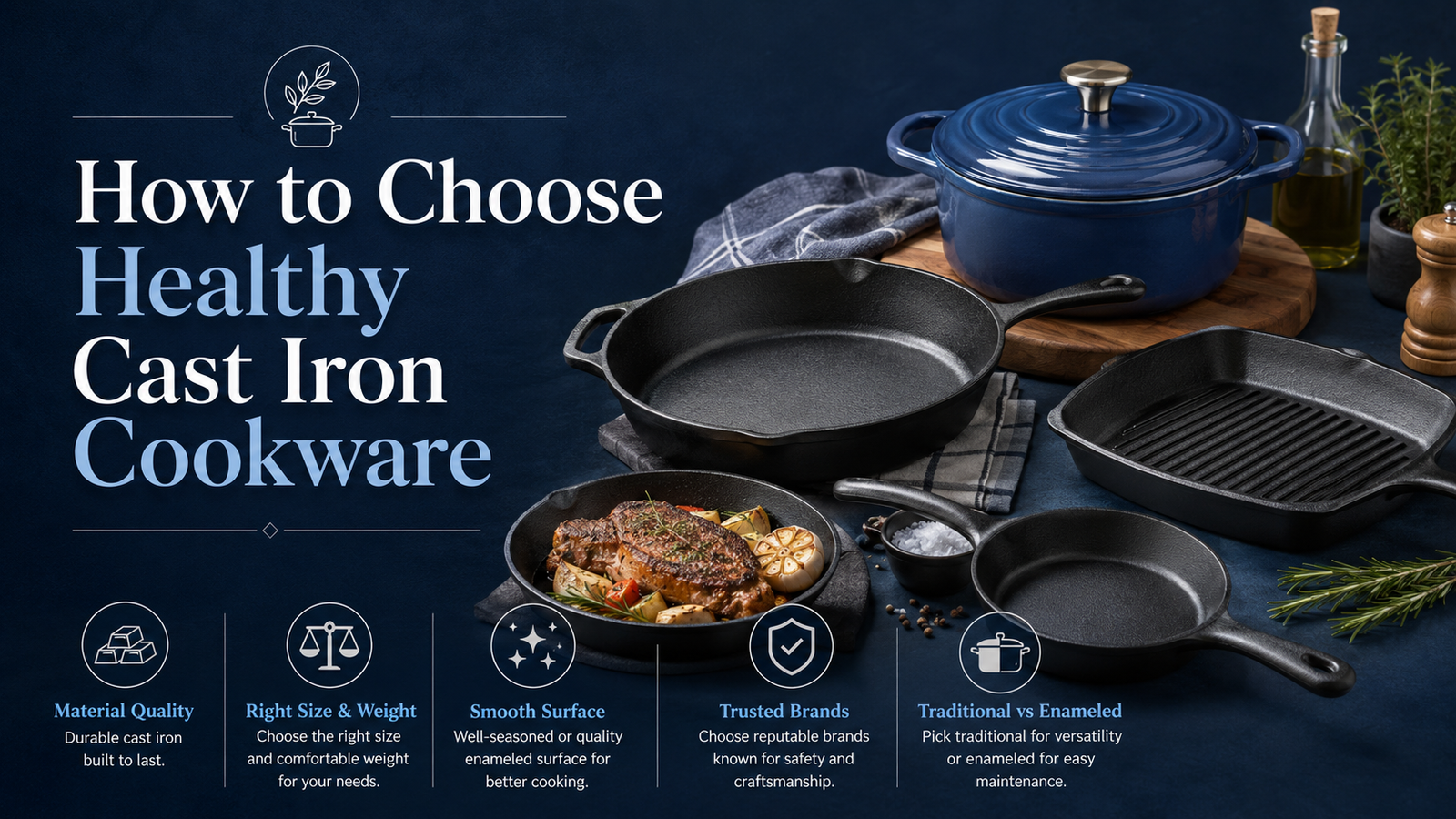
Choosing healthy cast iron cookware is not only about buying a heavy pan. The quality of the material, the surface, the size, and the way the cookware is made can all affect your cooking experience.
A good piece of cast iron cookware should be strong, safe for high-heat cooking, easy to season, and suitable for the meals you cook most often.
Check the Material Quality
High-quality cast iron cookware should be made from strong cast iron that can handle repeated heating and cooling. The cookware should feel solid, balanced, and durable.
Avoid cookware with visible cracks, weak handles, uneven surfaces, or poor finishing. A well-made cast iron skillet, grill pan, or Dutch oven should feel reliable and built for long-term use.
Choose the Right Size and Weight
Cast iron cookware is naturally heavy, so choosing the right size is important. A large pan may be useful for family cooking, but it can be difficult to lift or clean if it is too heavy.
For daily use, choose a size that fits your stove, oven, and cooking habits. A smaller skillet may be better for eggs and small meals, while a larger grill pan or Dutch oven may be better for meat, vegetables, bread, and family dishes.
Look for a Smooth Cooking Surface
The cooking surface is important when choosing cast iron cookware. A smoother surface is usually easier to season, easier to clean, and better for reducing sticking over time.
A good surface also helps oil spread evenly during seasoning. This improves the protective layer and makes the cookware more comfortable for daily cooking.
Choose Trusted Brands
When buying cast iron cookware, choose a trusted brand that clearly explains the material, care instructions, and product use. This helps you know how to season, clean, and maintain the cookware correctly.
Trusted brands also provide better support, product information, and guidance for beginners who are using cast iron cookware for the first time.
Decide Between Traditional and Enameled Cast Iron
Before buying, decide whether you need traditional cast iron cookware or enameled cast iron.
Traditional cast iron is ideal for high-heat cooking, searing, grilling, frying, and baking. It needs seasoning and can develop a natural cooking surface over time.
Enameled cast iron is easier to use with acidic foods and does not need seasoning, but it may not be the best choice for very high-heat searing. The best option depends on your cooking style and maintenance preference.
Why Eagle Cast Iron Cookware Is a Healthy Choice
Eagle Cast Iron cookware is designed for people who want strong, natural, and long-lasting cookware for everyday cooking. Whether you need a cast iron skillet, grill pan, or Dutch oven, Eagle Cast Iron offers cookware made for durability, heat retention, and reliable performance.
One of the main benefits of Eagle Cast Iron cookware is that it helps you cook with a natural surface instead of depending on synthetic non-stick coatings. With proper seasoning and care, the cookware becomes easier to use over time and can serve your kitchen for many years.
Eagle Cast Iron cookware is suitable for grilling, searing, frying, baking, roasting, and slow cooking. It is a strong choice for home cooks, families, and professional kitchens that need cookware built for daily use.
If you are looking for healthy cast iron cookware in Egypt, Eagle Cast Iron provides practical options with fast nationwide delivery and support to help you choose the right product for your kitchen.
FAQs About Cast Iron Cookware Health and Safety
Is cast iron cookware healthy?
Yes, cast iron cookware is healthy for most people when it is used and maintained correctly. It is durable, free from synthetic non-stick coatings, and can add small amounts of iron to food during cooking.
Is cast iron cookware toxic?
No, traditional cast iron cookware is not toxic when used properly. It is made mainly from iron and carbon and does not rely on synthetic chemical coatings. The main things to watch are rust prevention, proper cleaning, and iron transfer for people who need to limit iron intake.
Does cast iron cookware leach iron?
Yes, cast iron cookware can leach small amounts of iron into food. The amount depends on the food’s acidity, cooking time, moisture, and how well the cookware is seasoned. Acidic foods like tomato sauce may absorb more iron than dry foods like grilled meat or bread.
Is cast iron better than non-stick cookware?
Cast iron cookware is better for durability, high-heat cooking, heat retention, and long-term use. Non-stick cookware is easier to clean and more convenient for delicate foods, but the coating may wear down over time. The better choice depends on your cooking style and maintenance preference.
Can cast iron cookware cause too much iron?
For most people, the small amount of iron transferred from cast iron cookware is not a problem. However, people with hemochromatosis or iron overload conditions should be careful with frequent use of traditional uncoated cast iron.
Is rust on cast iron dangerous?
A small amount of surface rust on cast iron cookware does not always mean the cookware is ruined, but it should be removed before cooking. Rust can affect taste and the cooking surface if ignored. Clean the rust, dry the cookware completely, and re-season it before using it again.
Can I cook tomatoes in cast iron?
Yes, you can cook tomatoes in cast iron cookware, but it is better to avoid long simmering in traditional cast iron, especially if the pan is new or poorly seasoned. For long tomato-based sauces, enameled cast iron or stainless steel may be a better choice.
Is cast iron cookware safe for daily use?
Yes, cast iron cookware is safe for daily use for most people when it is properly seasoned, cleaned, dried, and stored. If you cook acidic foods every day or need to limit iron intake, you may need to use it less often or choose enameled cast iron.
Is cast iron cookware good for anemia?
Cast iron cookware may add small amounts of iron to food, which can support dietary iron intake. However, it should not be used as a medical treatment for anemia. Anyone with anemia should follow advice from a healthcare professional.
Who should avoid cast iron cookware?
People with hemochromatosis, iron overload conditions, or medical advice to limit iron intake should be careful with traditional cast iron cookware. People who need lightweight cookware may also prefer other options because cast iron is naturally heavy.
How often should I season cast iron cookware?
You should season cast iron cookware whenever the surface looks dry, dull, rusty, or when food starts sticking more than usual. For regular use, applying a very light oil layer after cleaning and drying helps maintain the seasoning.
What is the healthiest way to clean cast iron?
The healthiest way to clean cast iron cookware is to wash it with warm water and a soft brush or sponge, avoid long soaking, dry it completely, and apply a thin oil layer before storage. This protects the seasoning and helps prevent rust.
Conclusion: Is Cast Iron Cookware Healthy and Worth Buying?
Cast iron cookware is healthy, safe, and reliable for most people when it is used correctly. It is free from synthetic non-stick coatings, offers excellent heat retention, and can last for decades with proper care.
The main things to consider are proper seasoning, complete drying after washing, rust prevention, and iron transfer for people who need to limit iron intake. For everyday cooking, grilling, frying, searing, baking, and slow cooking, cast iron cookware remains one of the most trusted cookware choices.
If you want durable, natural, and long-lasting cookware for your kitchen, Eagle Cast Iron cookware offers skillets, grill pans, Dutch ovens, and other cast iron products designed for daily use and strong cooking performance.
Explore Eagle Cast Iron cookware today and choose the right piece for healthier, safer, and more reliable cooking at home.
For product inquiries, custom orders, or help choosing the right cookware, contact Eagle Cast Iron through WhatsApp or follow us on Facebook for updates, offers, and cooking tips.
Explore Healthy Cast Iron Cookware from Eagle Cast Iron
If you are ready to choose durable and reliable cast iron cookware for your kitchen, Eagle Cast Iron offers several product categories designed for everyday cooking, grilling, frying, baking, and slow cooking.
For deep frying, stir-frying, and high-heat cooking, explore our cast iron wok collection.
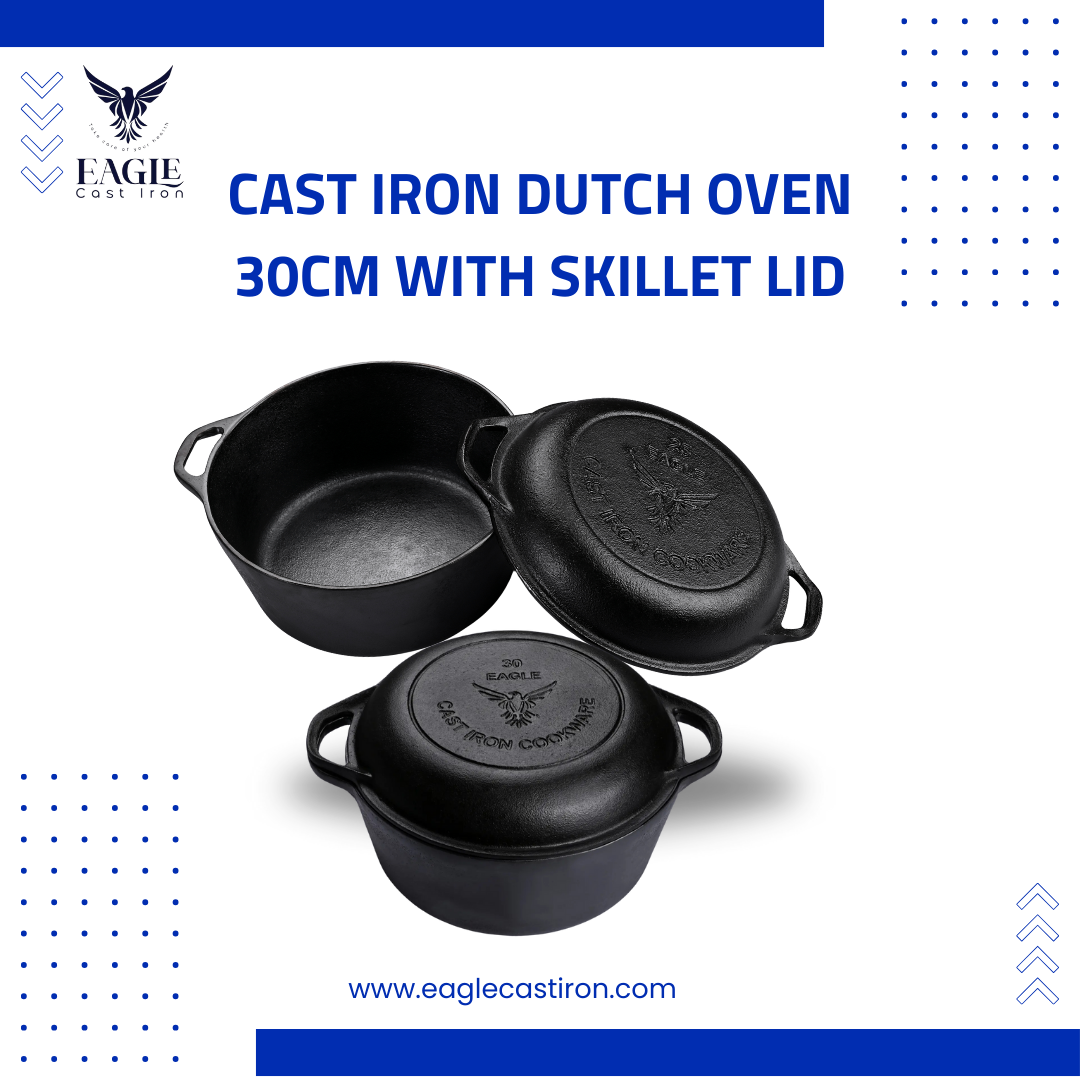
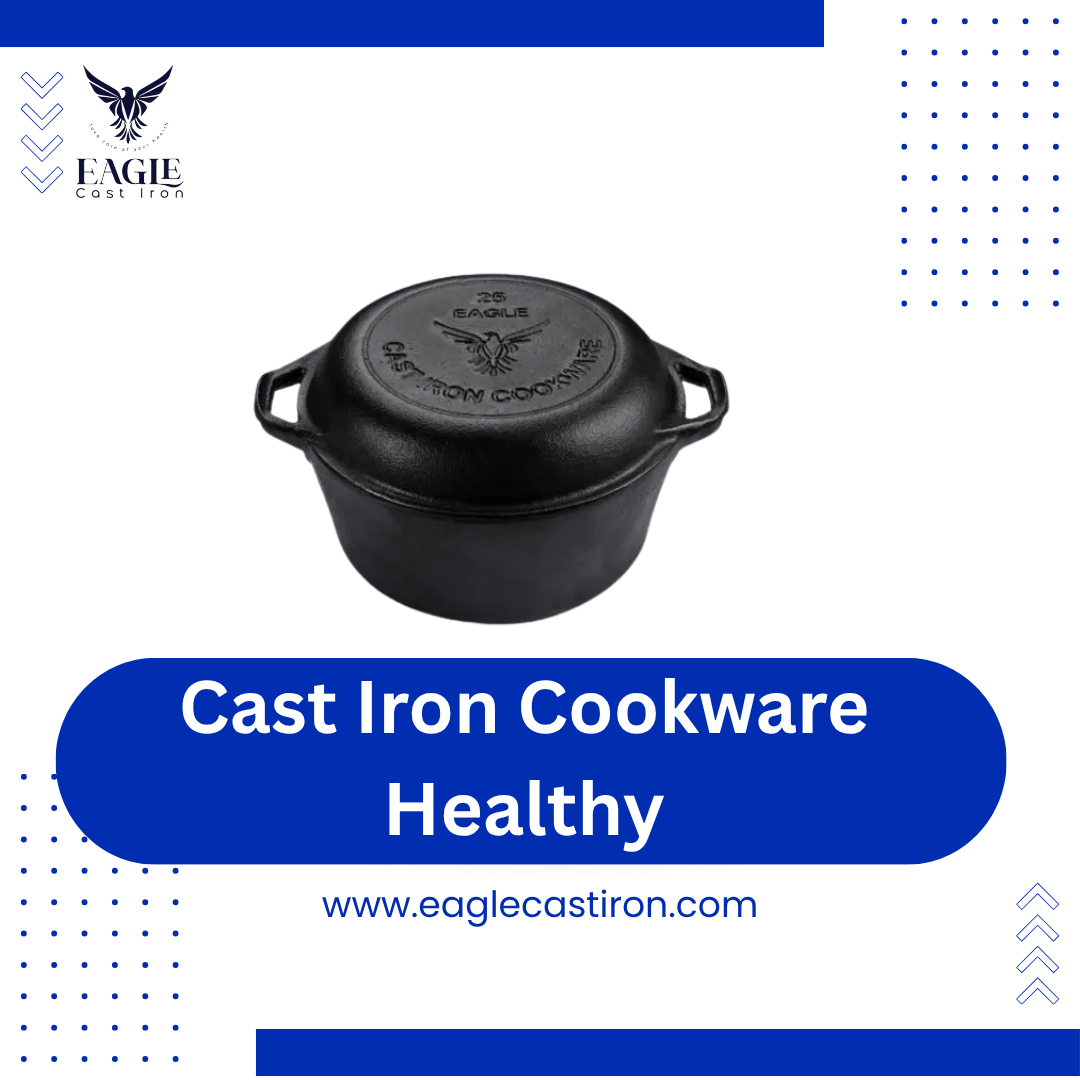
For slow cooking, baking bread, stews, casseroles, and family meals, explore our cast iron Dutch ovens.
For grilling meat, chicken, fish, and vegetables, explore our cast iron grills.
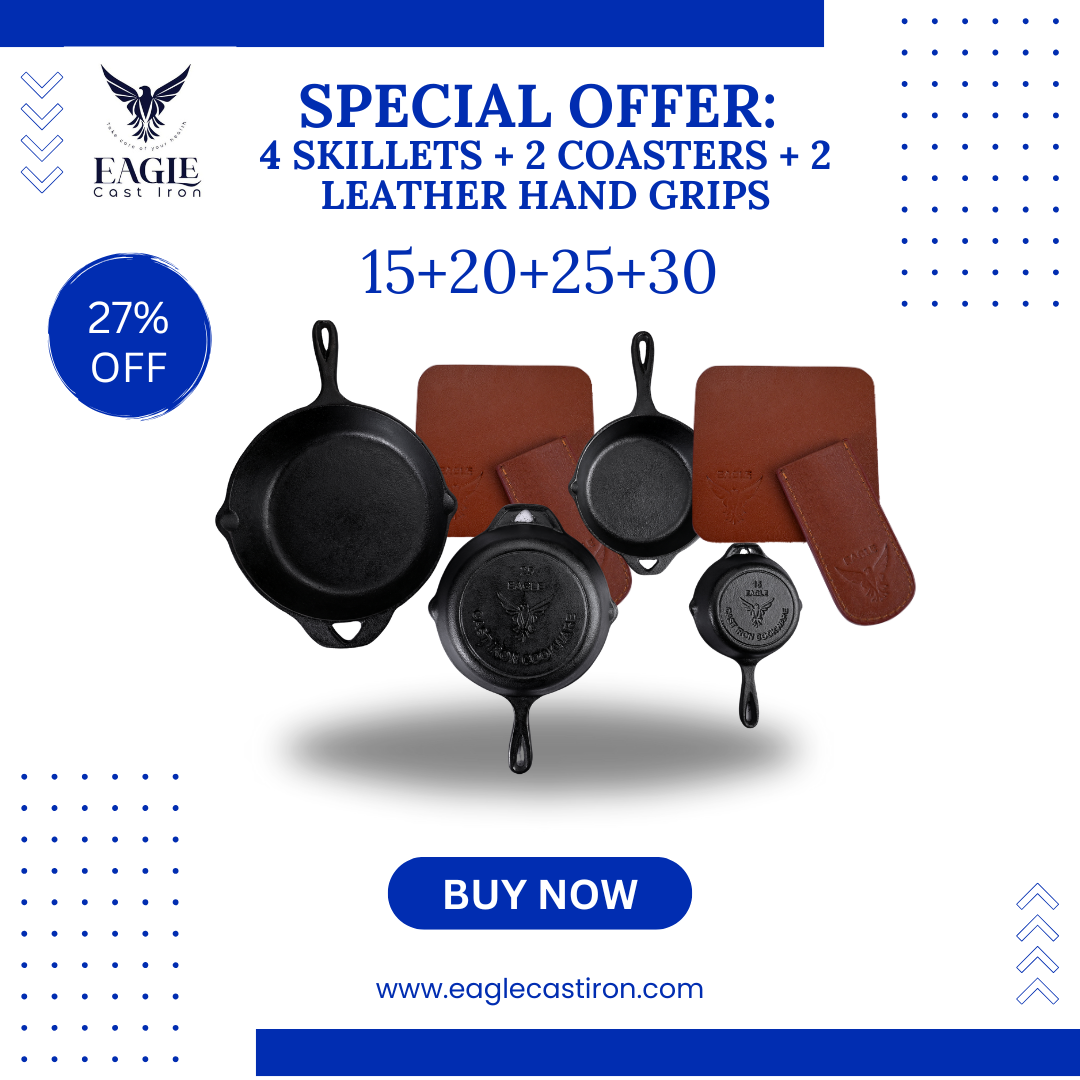
For everyday frying, searing, pancakes, eggs, and stovetop cooking, explore our cast iron skillets.
Choosing the right cast iron cookware depends on how you cook. A skillet is ideal for daily use, a grill pan is perfect for grilled flavor, a Dutch oven is best for slow cooking and baking, and a wok is useful for fast, high-heat meals.