When it comes to choosing the perfect cookware, modern kitchens are flooded with flashy, high-tech options. From ceramic coatings to heavily marketed non-stick pans, the choices seem endless. Yet, if you step into the kitchen of a Michelin-starred chef, or look back at the tools that crafted your grandmother’s most legendary meals, you will invariably find one timeless piece of culinary art: the cast iron skillet.
While modern chemical-coated pans promise effortless cooking, they often end up in landfills after a couple of years when their synthetic surfaces scratch and degrade. Cast iron, on the other hand, defies the disposable nature of modern kitchen gadgets. It is a living, breathing kitchen companion that doesn’t just last—it actually improves with every single meal you prepare. If you have ever wondered why top culinary experts refuse to cook a premium steak or a perfect cornbread in anything else, the secret lies in the unmatched structural features of raw iron.
Key Features: Why Cast Iron Outperforms Modern Cookware
Unbeatable Heat Retention & Thermal Mass
Unlike thin aluminum or copper pans that cool down the exact moment you drop a cold piece of meat into them, a heavy-duty cast iron skillet acts as a powerful heat reservoir. It possesses an incredible thermal mass, meaning once it gets hot, it stays hot. This consistent, intense heat is what guarantees an authentic, restaurant-quality searing and browning process, locking in juices and flavors effortlessly.
Naturally Non-Stick Over Time
You do not need toxic chemical coatings like Teflon, PFOA, or dangerous synthetic resins to keep your food from sticking. Raw iron relies on a completely natural process called seasoning (polymerization). Every time you cook with fats and oils, they bake into the porous surface of the metal, creating a slick, naturally non-stick cooking surface that actually gets better, smoother, and more resilient the more you use it.
Indestructible Durability: A Lifetime Investment
Most modern non-stick pans have a lifespan of just 2 to 5 years before the coating chips away and becomes a health hazard. A premium cast iron pan is virtually indestructible. It cannot be scratched by metal utensils, it won’t warp under extreme temperatures, and it is immune to breaking. It is not just a kitchen tool; it is a timeless heirloom designed to be passed down through generations.
Nutritional Bonus: Boosting Your Iron Levels Naturally
Cooking in raw iron offers a remarkable health benefit that no other material can match. When you prepare meals—especially slightly acidic ones—in a cast iron skillet, it naturally releases microscopic amounts of dietary iron into your food. This provides a safe, completely organic nutritional bonus that helps fortify your daily meals and naturally supports healthy iron levels.
The Ultimate Culinary Chameleon: Extreme Versatility
From Stove to Oven Seamlessly
One of the greatest frustrations with modern cookware is the limitation of handles and materials. A typical non-stick pan with a plastic or silicone handle will melt or release toxic fumes if placed inside a high-heat oven. A cast iron skillet completely eliminates this barrier. Since it is forged from a single piece of solid raw iron, it can transition seamlessly from high-heat searing on the stovetop straight into the oven for deep baking or slow roasting. This makes it the perfect stove-to-oven cookware for recipes that require initial crisping followed by controlled, thorough cooking.
Multi-Surface Compatibility
Whether you are upgrading your indoor kitchen or heading out into the wilderness, your cast iron pan adapts to every cooking environment. It is one of the few traditional materials that is naturally magnetic, making it fully compatible with modern induction cooktops, as well as standard gas and electric stoves. Beyond the kitchen, it thrives under the rugged conditions of outdoor grilling or sitting directly over the open flames of a backyard camp fire. It is truly an all-in-one culinary tool that performs flawlessly on any heat source.
Best Uses: What Cooks Best in a Cast Iron Skillet?
The Perfect Sear (Meat & Poultry)
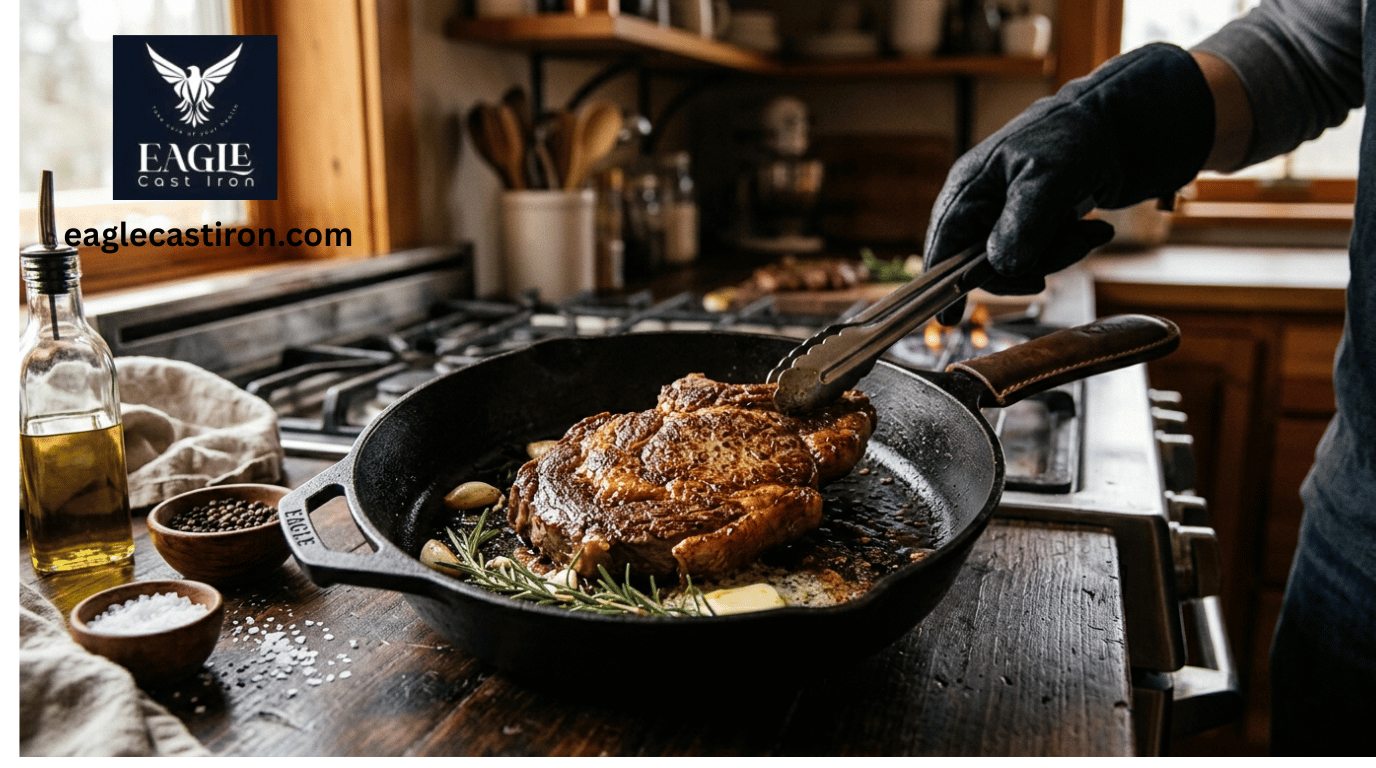
If you want to achieve a restaurant-quality, golden-brown crust on your steaks, pork chops, or burgers, nothing beats a heavy-duty cast iron skillet. Because it maintains an incredibly high and steady surface temperature, it triggers the Maillard reaction perfectly, locking in rich juices while creating an exquisite, savory outer crust. It is also the ultimate tool for achieving crispy, golden skin on pan-seared chicken breasts and salmon fillets.
Golden Baking & Crisping
Cast iron isn’t just for frying; it is a phenomenal baking dish. The intense, radiant heat from the iron turns bottom crusts into crisp, golden perfection. It is widely celebrated as the absolute best tool for baking traditional crispy cornbread, deep-dish pan pizzas, rustic cobblers, and giant, gooey skillet cookies. The even heat distribution ensures that your baked goods rise uniformly without leaving any raw or undercooked cold spots in the center.
Searing, Sautéing & Stir-Frying
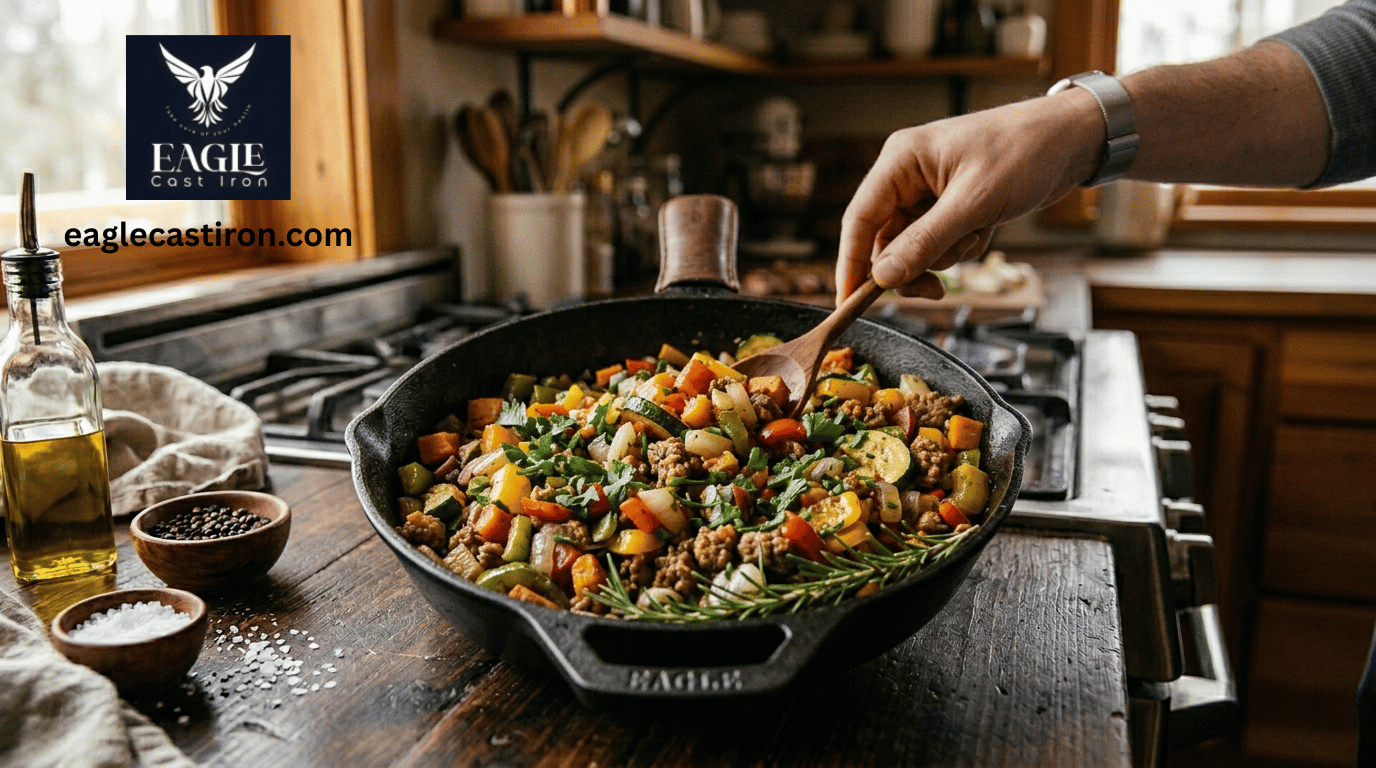
When you need to cook vegetables quickly at high heat without them becoming soggy or mushy, a cast iron pan is your best ally. It allows you to quickly flash-fry and char vegetables, making it perfect for smoky restaurant-style fajitas, blistered green beans, and crisp stir-fries. The high heat retention ensures that veggies retain their vibrant color and satisfying crunch.
Deep Frying & Shallow Frying
Frying requires absolute control over oil temperature; drop cold food into a weak pan, and the oil temperature plummets, resulting in greasy, soggy food. Because cast iron holds onto its thermal mass so efficiently, the oil temperature stays stable even when adding batches of food. This makes it ideal for achieving the ultimate, crunchy crust on southern fried chicken, homemade french fries, or crispy falafel.
Cast Iron vs. Non-Stick vs. Stainless Steel: The Ultimate Comparison
Choosing the right cookware can be confusing with so many options on the market. To help you see exactly why a cast iron skillet deserves a permanent spot on your stove, let’s compare it directly with the two most common alternatives: synthetic non-stick pans and stainless steel.
| Feature | Cast Iron Skillet | Standard Non-Stick Pan | Stainless Steel Pan |
| Heat Retention | Excellent (Unbeatable) | Poor to Moderate | Moderate |
| Lifespan & Durability | Lifetime (Indestructible) | Short (2–5 Years) | Long (Durable) |
| Chemical Safety | 100% Safe & Natural | Risk of toxic fumes if overheated | Safe (Chemical-free) |
| Non-Stick Surface | Yes (Improves with age) | Yes (Degrades with age) | No (Requires heavy oil) |
| Stove-to-Oven Use | Flawless (High Heat) | No (Handles/Coatings melt) | Yes (High Heat) |
| Value for Money | High (One-time purchase) | Low (Frequent replacement) | Moderate to High |
Why Cast Iron Wins the Showdown:
- Over Non-Stick: While traditional non-stick pans lose their coating and need to be thrown away constantly, your cast iron pan gets slicker, smoother, and more non-stick the more you cook with it.
- Over Stainless Steel: Stainless steel is great for boiling or making pan sauces, but it struggles with heat retention. When you drop a cold steak onto stainless steel, the surface temperature drops instantly, preventing that deep, golden-brown searing and browning that cast iron handles effortlessly.
Crucial Care Tips Every Beginner Must Know
The “No Soap” Myth Demystified
For decades, backyard chefs and home cooks passed down a strict rule: never use soap on cast iron. While this was true back when old-school soaps contained harsh, surface-stripping lye, modern dish soaps are completely safe. A few drops of mild dish soap and a gentle sponge will not strip away your hard-earned seasoning, because that dark coating is no longer liquid oil—it has bonded chemically into a solid, protective layer.
The Golden Rule: Absolute Dryness
The absolute greatest enemy of raw iron is trapped moisture. To keep your cookware completely pristine and eliminate the risk of corrosion, never let it air-dry in a rack or soak in the sink overnight. The ultimate rust prevention routine is simple: after washing, wipe your skillet thoroughly with a clean towel, then place it over a hot stovetop burner for just one or two minutes until any hidden, microscopic drops of water evaporate completely.
Why Eagle Cast Iron is the Ultimate Choice for Your Kitchen?
Premium Craftsmanship with International Standards
When investing in a heirloom kitchen tool, you deserve a product that delivers top-tier performance from day one. Eagle Cast Iron combines heavy-duty durability with precision engineering. Every single cast iron skillet is manufactured locally using premium raw iron, built to compete with international brands while offering incredible value for money.
Factory Pre-Seasoned and Ready to Go
One of the biggest hurdles for beginners is learning how to do the initial seasoning process. Eagle Cast Iron eliminates this barrier completely. Our cookware arrives at your doorstep pre-seasoned with natural vegetable oils baked directly into the iron at extremely high temperatures. This ensures a rich, dark protective layer right out of the box, letting you jump straight into making your favorite recipes with confidence.
Troubleshooting & FAQ: Frequently Asked Questions
What should I do if my skillet rusts?
Don’t panic—rust is never a death sentence for a heavy-duty cast iron skillet. If your pan accidentally gets exposed to moisture and develops rust spots, simply scrub the affected area with a steel wool pad and mild soap to remove the corrosion down to the raw iron. Once clean, dry the skillet completely on a hot stove burner, apply a thin layer of cooking oil across the entire surface, and bake it in your oven at 200∘C (400∘F) for an hour to rebuild the protective seasoning.
Can I cook acidic foods in cast iron?
Yes, but with caution. Brief cooking of acidic ingredients—like simmering a quick tomato sauce or deglazing a pan with lemon juice—is perfectly fine on a well-seasoned cast iron pan. However, you should avoid prolonged simmering of highly acidic liquids for multiple hours, as the acid can break down the natural non-stick oil layers and potentially leach a metallic taste into your food.
How do I know if my skillet is seasoned properly?
A perfectly seasoned skillet will have a smooth, semi-glossy, dark black surface that easily releases food. If you notice that your food is sticking frequently, or if the metal looks dull, grey, and dry, it is a clear sign that your pan needs a fresh layer of seasoning (polymerization) to restore its natural slickness.
Conclusion: Make the Switch Today
Investing in a premium cast iron skillet is one of the smartest decisions you can make for your kitchen. It effortlessly outperforms fragile, short-lived synthetic pans by offering unbeatable heat retention, ultimate cooking versatility, and completely natural health benefits.
With Eagle Cast Iron, you are not just buying another piece of cookware—you are welcoming a lifetime cooking companion that gets better with every single meal. Upgrade your culinary game today, say goodbye to toxic chemical coatings, and experience the unmatched flavor of real iron cooking.
Ready to transform your cooking experience?